
Inktober 2020: Colony. Double-crested Cormorants.

Inktober 2020: Emerge. A Belted Kingfisher emerging from a streambank burrow.

Inktober 2020 (Botober): Perissodactyla. Woolly tapir.
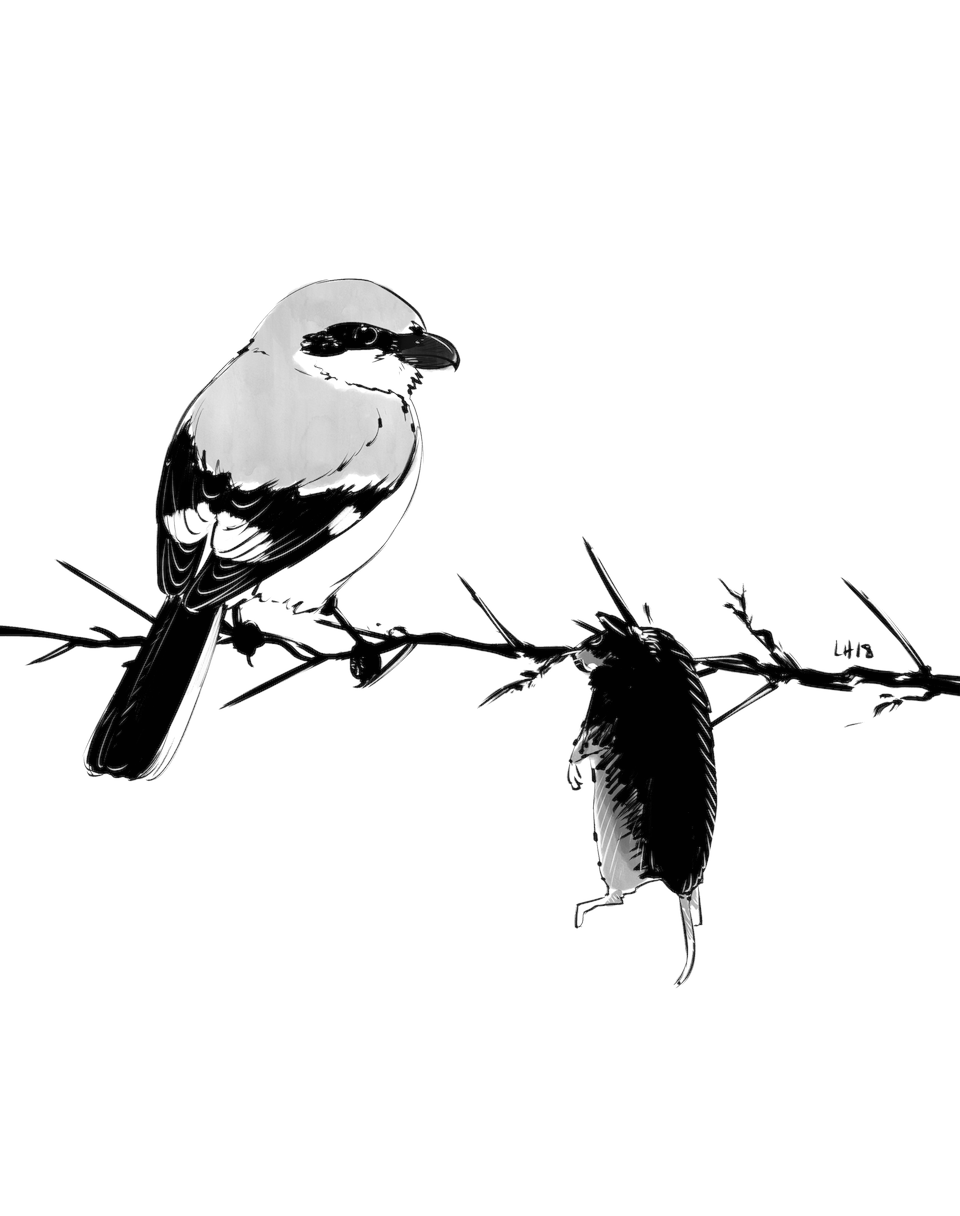
Inktober 2018: Cruel. Shrikes are the only predatory songbirds. They often capture prey too large to swallow in one bite, so they hang their food from thorns or barbed wire to hold it in place while they eat.

Inktober 2016: Slow
A male Snowy Egret carefully stalks fish in a shallow marsh, moving one cautious, deliberate step at a time.
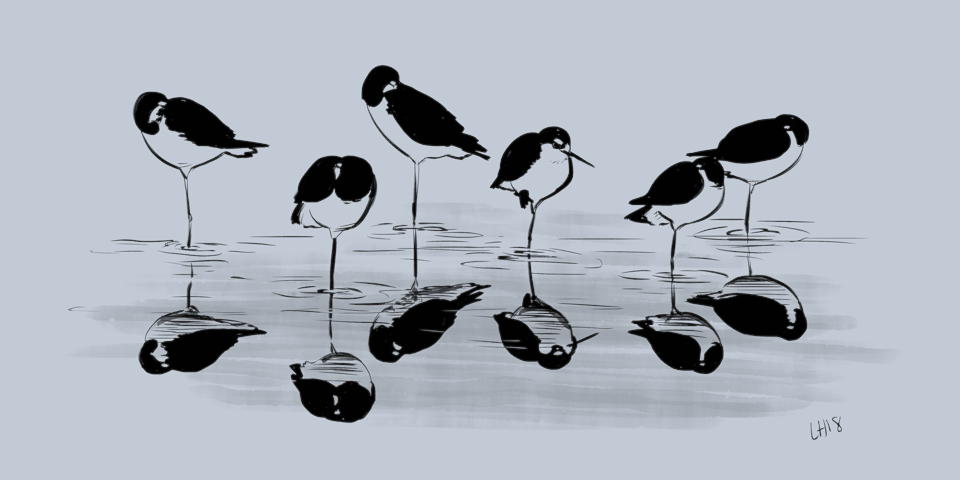
Inktober 2018: Exhausted. Exhausted. A group of Black-necked Stilts rests in shallow water during the heat of the day.

Inktober 2016: Flight
A group of Sandhill Cranes passes overhead on a warm autumn day, as they make their way south for the coming winter months.
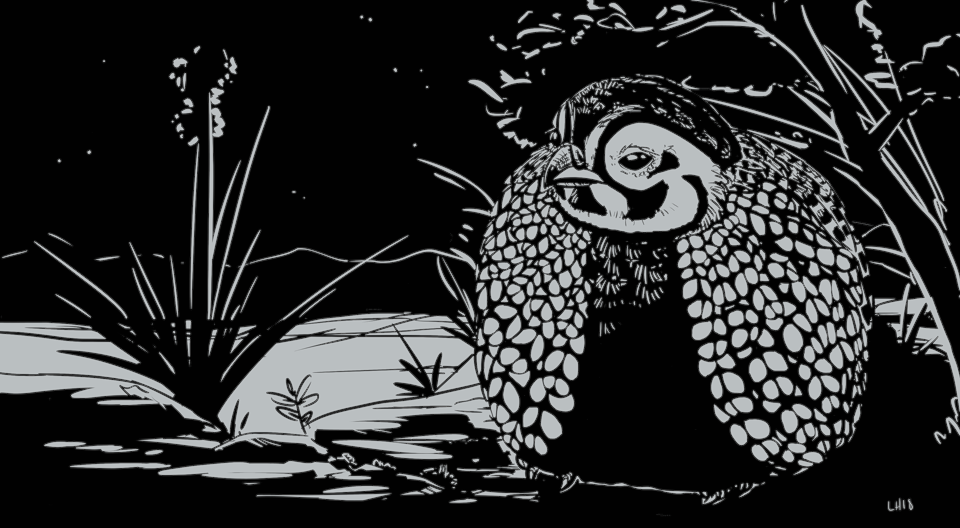
Inktober 2018: Tranquil. A Montezuma Quail settles down to roost beneath the protective boughs of a catclaw shrub in the foothills of the Chisos Mountains.
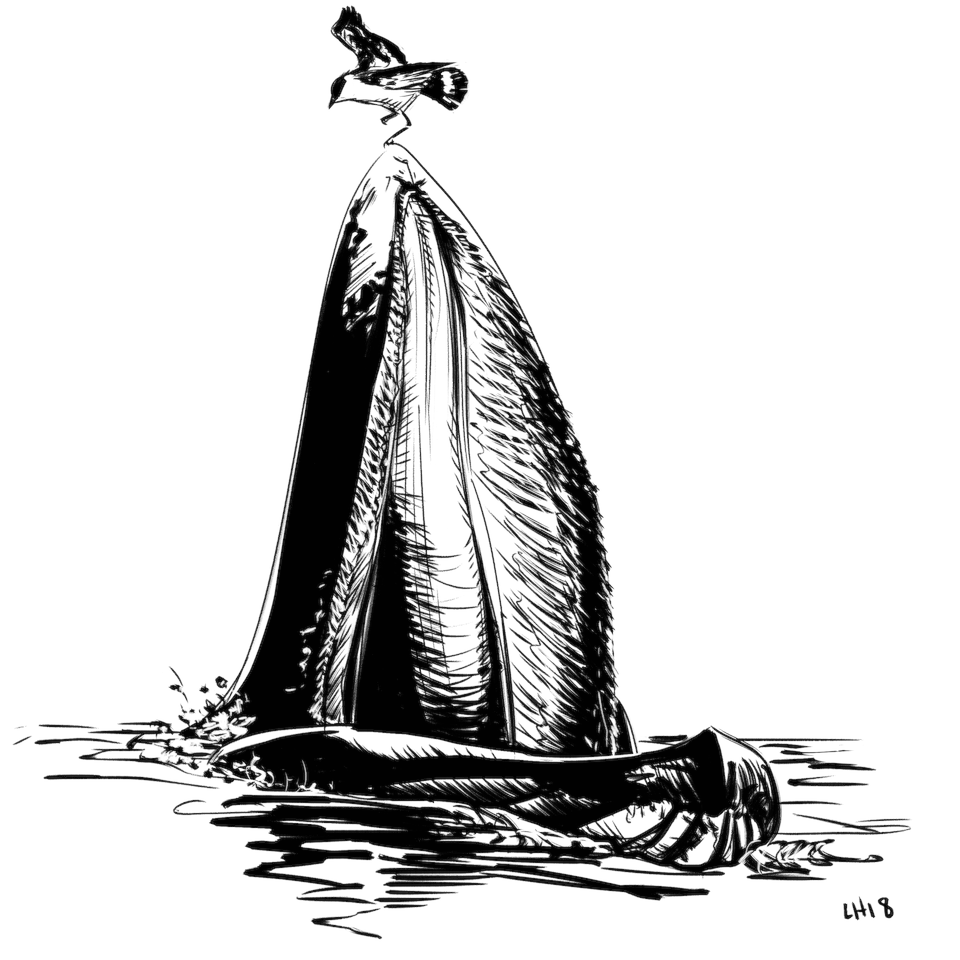
Inktober 2018: Whale. Birds like the Sooty Shearwater were considered “whale birds” by whalers in the Atlantic. Underwater, the whales blew curtains of bubbles to chase small fish upward, and the shearwaters fed on them at the surface.

Inktober 2016: Fast
A Peregrine Falcon, one of the fastest animals on the planet, stoops at a Mallard drake. Ducks have evolved their own countermeasures against these formidable predators – they may not be as fast, but they’re still awfully quick, as well as incredibly maneuverable in the air. They’re also strong, and can whip their wings fast enough to kill a falcon if the predator isn’t careful to keep out of harm’s way.

Inktober 2016: Noisy
Not a real bird, but certainly inspired by cockatoos, which make some pretty awful grating sounds.

Inktober 2016: Collect
A crow perches on a glass amphora full of water. With enough stones dropped in the bottom, the water level will rise, so it can have a drink. Based off of Aesop’s fable The Crow and the Pitcher, which recent corvid behavioral studies have confirmed – crows do indeed understand that dropping stones in a container of water will result in the water rising, and use this to their advantage.

Inktober 2016: Hungry
A Barn Owl swallows its prey, a house mouse, whole.

Inktober 2016: Sad
Magpies are one of a few species of birds that have been documented holding what appear to be ‘funerals’ for their dead. Magpies will approach the dead bird and leave small clipped pieces of grass or other plant material by its body.

Inktober 2016: Water
The American Dipper, along with the other few dippers around the world, is an unusual songbird – they are aquatic, living in and around fast-moving streams, and can dive and swim to catch underwater insects and other small invertebrates.

Inktober 2016: Squeeze

Inktober 2016: One Dozen
A flock of Verdins pauses to socialize in a dead mesquite shrub.

Inktober 2016: Tired
A Black-billed Magpie rests in an old oak tree.

Inktober 2016: Wreck
A Collared Kingfisher perches on an old overgrown tank, a relic of World War II.
Inktober and other line drawings
I love drawing with real ink, I really do, but each year I go ‘inktober is too much effort!’ because getting out actual inks and paper and spending the time to do these drawings is, well, too much effort on top of all my other obligations. So I’m not letting that be my excuse – doing digital inking is better than not doing it at all, and I think I’ll still benefit a lot from getting more practice doing lineart and black and white illustrations, even if it’s with a tablet and photoshop rather than pen and paper.